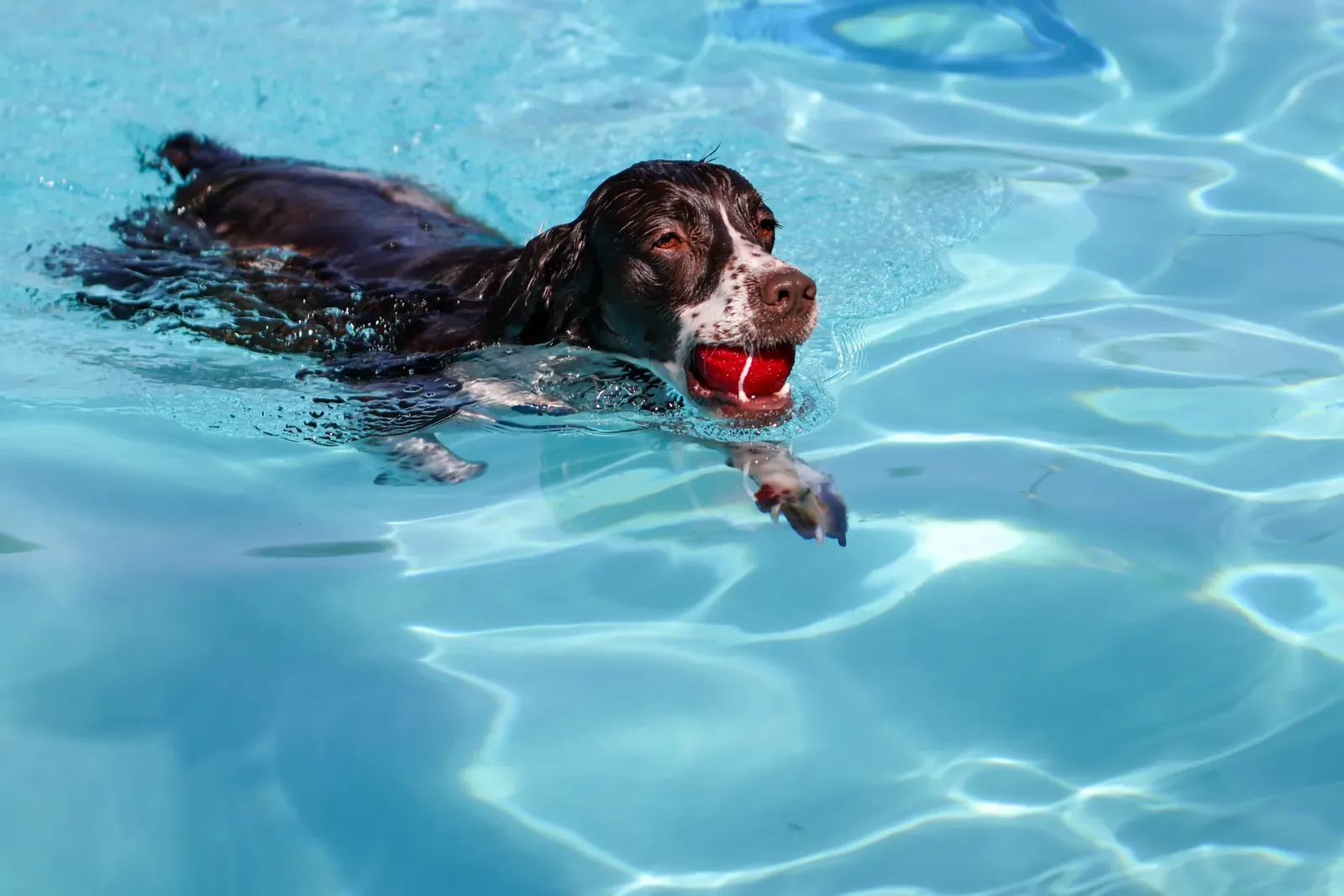
It's a common belief that every dog can swim by instinct. Most dogs will paddle when they're in water, but paddling and swimming safely aren't the same thing. Some dogs take to the pool naturally, some need help to learn, and a few should only ever swim with extra support.
Do All Dogs Know How to Swim?
Most dogs instinctively move their legs in a paddling motion when they're in water. That doesn't mean they can stay afloat comfortably or for long. How well a dog swims depends on its body shape, coat, age, health and confidence.
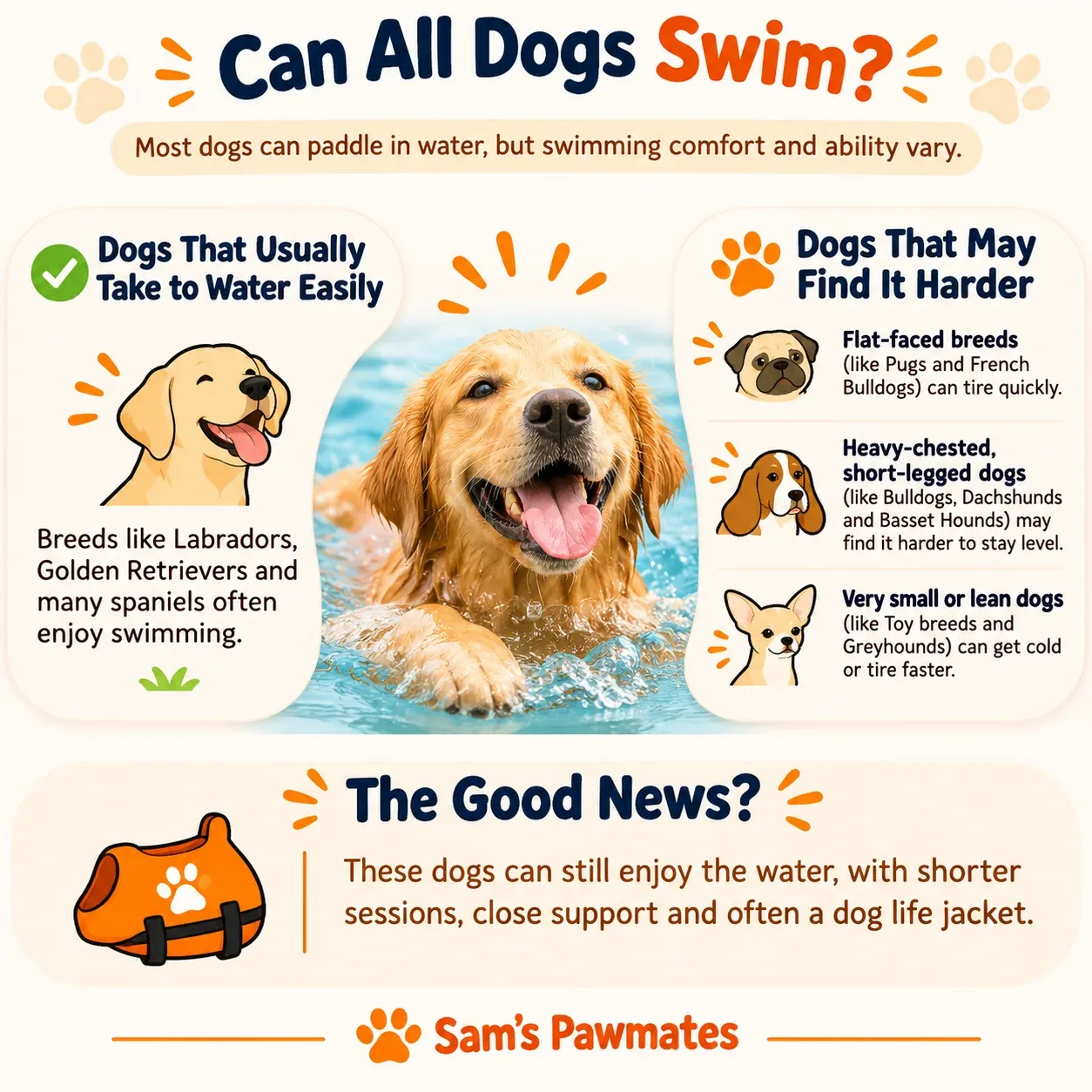
Dogs That Usually Take to Water Easily
Breeds developed to work in and around water, such as Labradors, Golden Retrievers and many spaniels, often enjoy swimming. Their build, coat and sometimes partially webbed feet help in the water. Even within these breeds, individual dogs vary. Some Labradors dislike water entirely.
Dogs That Often Find Swimming Harder
Flat-faced breeds. Pugs, French Bulldogs, Shih Tzus and other short-nosed dogs have to tilt their heads up to keep their noses clear of the water, which can tire them quickly and make breathing harder.
Heavy-chested, short-legged dogs. Bulldogs, Dachshunds and Basset Hounds carry their weight at the front with short legs, which makes it harder to stay level in the water.
Very small or very lean dogs. Toy breeds can tire fast and get cold, while very lean dogs, like Greyhounds, have less natural buoyancy.
Heavy or long-coated dogs. A thick coat can become heavy once it's soaked.
These dogs can often still enjoy the water. They usually need shorter sessions, closer support and often a dog life jacket.
Age and Health Matter Too
Puppies. Young puppies tire quickly and shouldn't be left in water unsupervised. Keep early sessions very short and check with your vet about when your puppy is ready.
Senior dogs. Swimming is low-impact and can be excellent for older dogs, but sessions should be short and gentle.
Health conditions. Dogs with heart or breathing problems, seizures, ear infections, open wounds or skin conditions should get the all-clear from a vet before swimming.
Dogs recovering from injury. Swimming is sometimes recommended for rehabilitation, but only with your vet's guidance.
How to Help a Dog Learn to Swim
Start in shallow water with an easy exit. Steps that let a dog walk in and out make a big difference to confidence.
Support the back end. Many beginners let their back legs sink. A hand under the belly helps them find a level position.
Keep the first sessions short. A few minutes of positive experience is better than a long, tiring swim.
Never throw a dog into water. It can create a lasting fear of water.
Our guide to your dog's first swimming session covers what to expect step by step.
Water Safety for Every Dog
Always supervise. Even confident swimmers can tire suddenly.
Teach the way out. Make sure your dog knows where the steps or exit are.
Watch for tiredness. Heavy panting, sinking back legs or a struggle to keep the head up all mean it's time for a break.
Avoid drinking pool water. Offer fresh water before and after swimming.
Rinse and dry afterwards. Rinse the coat and dry the ears to avoid skin and ear irritation, particularly in Chennai's humidity.
So, Can Your Dog Swim?
Most dogs can learn to enjoy the water with patience and the right support. Some will become strong swimmers; others will prefer to paddle near the steps with a life jacket on. Both are fine. What matters is that your dog feels safe. For more on why it's worth trying, read Why Your Dog Needs to Try Swimming.
Swimming at Sam's Pawmates
A pool designed for dogs. Our dedicated dog swimming pool has special steps that help dogs walk in and out of the water.
Help for first-time swimmers. Our handlers can get into the pool with dogs who need assistance or reassurance.
Owners can swim too. You're welcome to join your dog in the water.
Book a swim on its own. Sessions cost ₹1,000 + GST, with no need to book daycare or boarding.
Not sure how your dog will take to the water? Talk to our team before your first visit, and let us know about your dog's breed, age and any health conditions.