Think about how you cope with Chennai's summer. AC, cold water, light clothes, slippers so the ground doesn't burn your feet.
Now imagine going through the same heat with a full coat of fur and bare paws. That's what your dog deals with every single day from April through June, and it's worth understanding properly so you can genuinely help.
Chennai's summer regularly pushes temperatures past 38-40°C, and the city's coastal humidity makes it harder for dogs to cool down than the temperature alone suggests.
This guide covers what makes Chennai's summer genuinely risky for dogs, and exactly what to do about it, from hydration and walk timing to spotting heatstroke early.
Why Chennai's Heat Is Genuinely Dangerous for Dogs
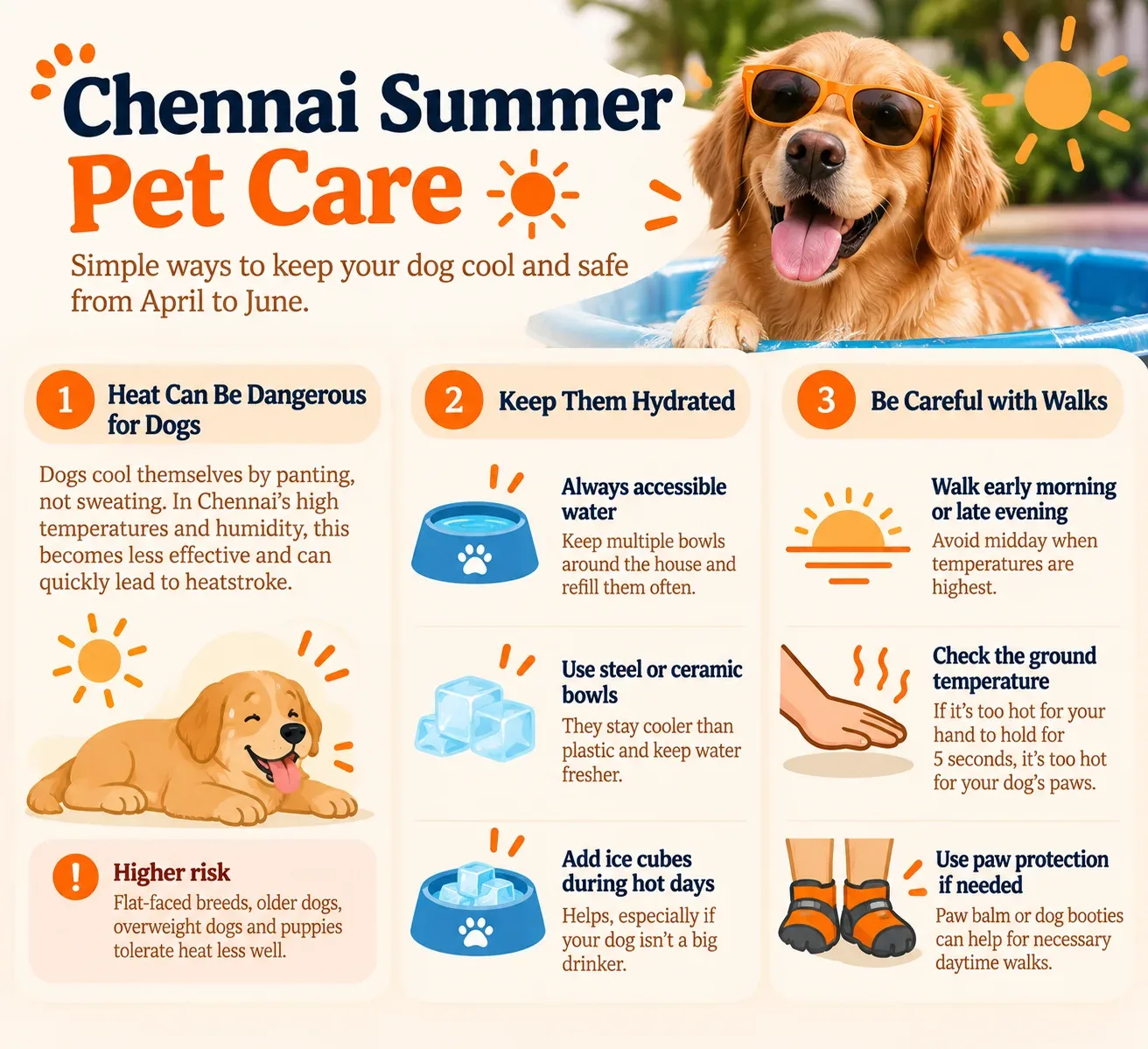
Dogs cool themselves almost entirely by panting, they don't sweat the way humans do, aside from a small amount through their paw pads.
When the air temperature gets close to a dog's own body temperature (around 38-39°C), panting stops working effectively, and their core temperature can rise quickly.
Humidity makes this worse, since moist air carries away less heat than dry air, which is exactly the condition Chennai's coastal climate creates for several months a year.
Some dogs are at higher risk than others. Brachycephalic (flat-faced) breeds like Pugs, Bulldogs, and Shih Tzus struggle more to cool themselves even in normal heat, and older dogs, overweight dogs, and puppies also tolerate high heat less well than a healthy adult dog of an average build.
Hydration
Water needs to be accessible, not just present. Keep multiple bowls around the house, refill them often, and place at least one in a shaded, cool spot.
Steel or ceramic bowls hold up better than plastic, which can heat up quickly and make the water inside warmer than it should be.
Ice cubes in the water bowl during peak afternoon hours can help, especially if your dog isn't a big drinker on their own.
Wet, kibble-only diets can quietly compound dehydration. Dry kibble is typically only 6-10% moisture, so if that's your dog's main diet, keeping water intake high matters even more during summer months.
Walk Timing and Paw Protection
Walk early morning or late evening, not midday. Asphalt and concrete can exceed 60°C in direct summer sun, hot enough to burn paw pads within seconds of contact.
Test the pavement with your own hand before a walk. If it's too hot for your hand to hold comfortably for five seconds, it's too hot for your dog's paws.
Consider paw balm or dog booties for necessary daytime walks, if your dog will tolerate them.
What Are the Signs of Heatstroke in Dogs, and What Should You Do?
This is worth taking seriously, heatstroke can escalate quickly and become life-threatening.
Watch for these signs: heavy or frantic panting, excessive drooling, weakness or wobbliness, vomiting, disorientation, or collapse.
If you notice these signs, act immediately. Move your dog to a cool, shaded area right away, offer water, and apply a cool (not ice-cold) wet towel to their body, particularly the belly and paw pads. Get them to a vet as quickly as possible, even if they seem to recover somewhat, heatstroke can cause internal damage that isn't visible right away.
Never leave a dog in a parked car, even briefly. Car interiors heat up dangerously fast, even with windows partly open.
What Should Dogs Eat in Chennai's Summer Heat?
A few small shifts can help dogs stay cooler and more comfortable through the hottest months:
Lighter, more easily digestible meals. Rich, oily food, or fatty table scraps as treats, takes more energy to digest, which generates internal heat your dog doesn't need on top of the weather. Sticking closer to their regular diet, without adding heavier extras, tends to help more in peak summer.
Hydrating fruits and vegetables as occasional treats. Watermelon and cucumber, given in small amounts, add both moisture and a bit of variety, alongside their regular meals.
Plain curd or buttermilk in small quantities. A common cooling addition in Tamil Nadu households, plain and unsweetened. ( in moderation, since dairy doesn't agree with every dog).
Coconut water, but with a genuine caveat. Most sources describe plain, unsweetened coconut water as safe for dogs in small amounts, useful for a gentle electrolyte boost in hot weather. That said, not every vet agrees, some flag its potassium content and note it shouldn't replace regular water. If you want to try it, start with a small amount, and skip it entirely for dogs with kidney issues or other health conditions your vet hasn't cleared it for.
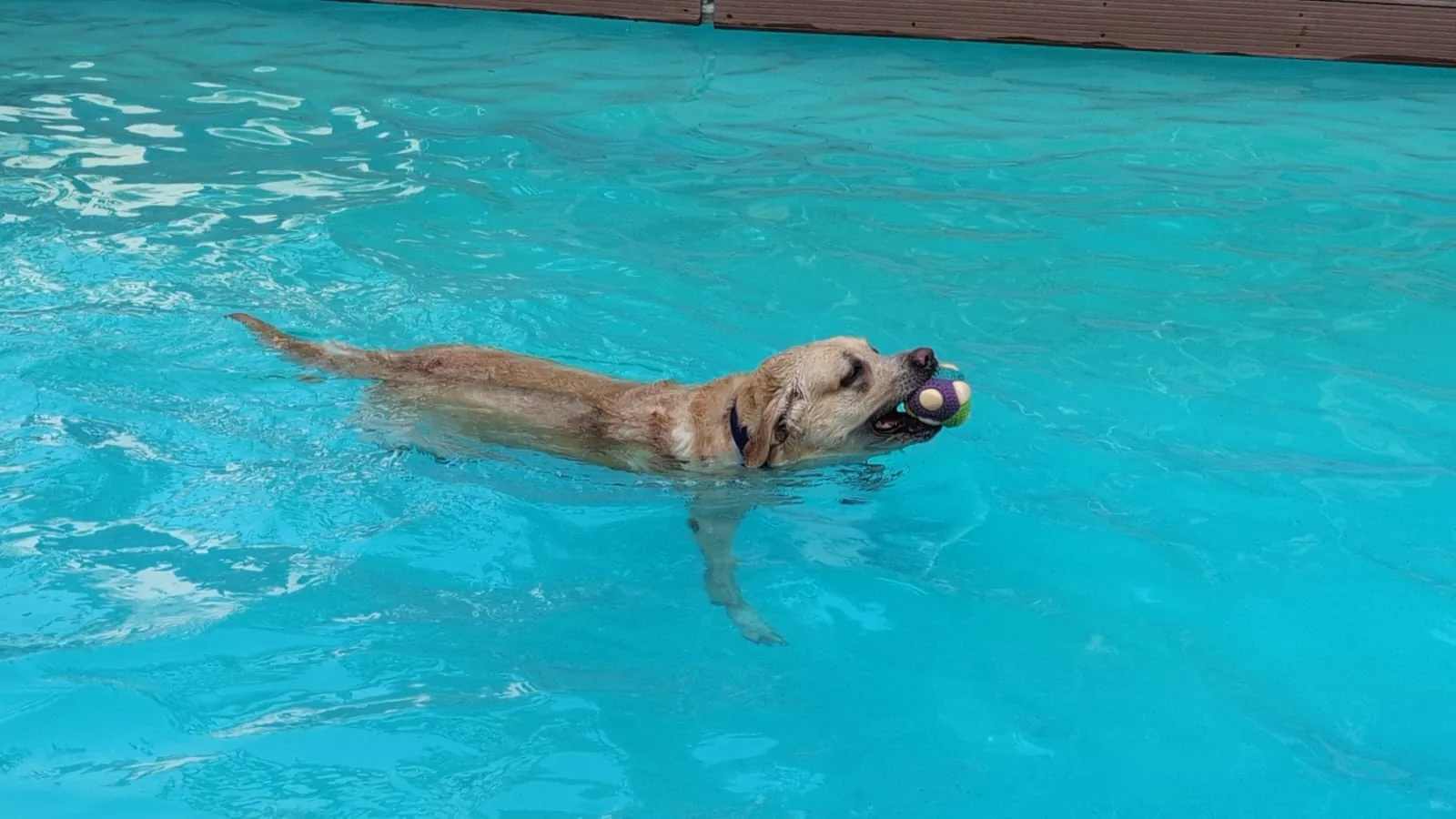
Frozen treats for hot afternoons. Ice cubes, or small pieces of fruit frozen into ice, can be a genuinely enjoyable way for a dog to cool down.
Feeding at cooler times of day. Early morning or evening meals tend to sit better than a large midday meal in peak heat.
As with anything new in your dog's diet, introduce it gradually and check with your vet first if your dog has any existing health conditions.