Chennai's monsoon, mainly October through December, brings welcome relief from the summer heat, but it comes with its own set of risks for dogs.
Damp fur, muddy paws, and standing water create conditions for skin infections, ear problems, and parasites that most pet parents underestimate until they're already dealing with them.
Here's what to watch for and exactly how to keep your dog healthy and comfortable through the rains.
Why Monsoon Season Is Risky for Dogs
Humidity and dampness create ideal conditions for fungal and bacterial growth, on skin, in ears, and in a dog's living space.
A dog's coat can barely dry between walks once humidity climbs, which means moisture gets trapped against the skin far more than it would in drier months.
Add in more ticks and fleas, which become more active in warm, damp weather, and monsoon adds up to more health risk than its milder temperatures might suggest.
How Should You Care for Your Dog's Paws and Coat During Monsoon?
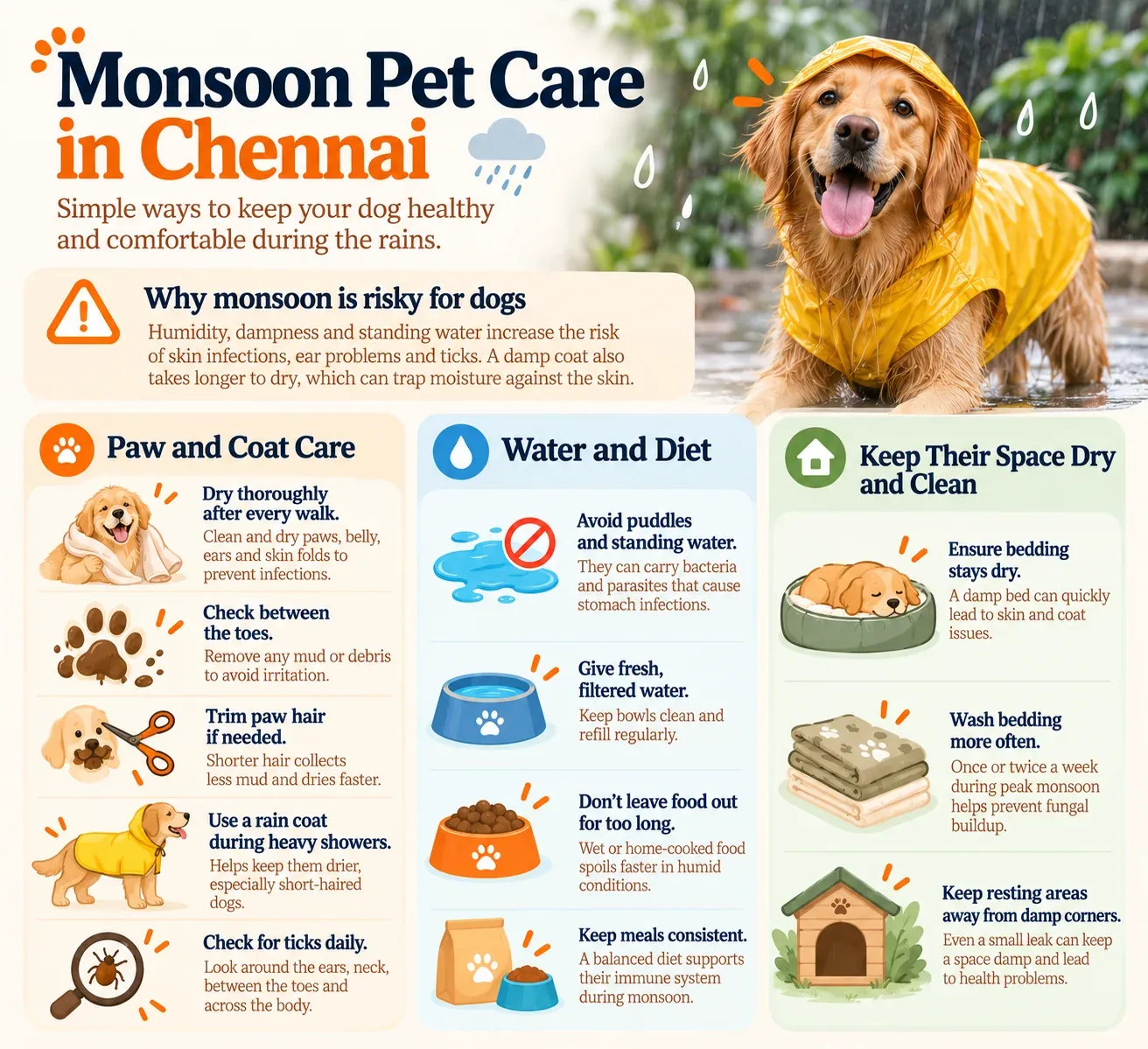
Dry your dog thoroughly after every walk, not just a quick wipe. Paws, belly, ears, and any skin folds need proper attention, since trapped moisture is one of the biggest causes of monsoon skin problems.
Check between the toes and paw pads for embedded mud or debris. Left in place, this can lead to irritation or infection surprisingly fast.
Trim the hair between paw pads if it tends to grow long. Shorter hair here collects less mud and dries faster.
Consider a rain coat for walks during heavier showers, particularly for short-haired or thin-coated dogs who chill more easily when wet.
Check your dog's whole body daily for ticks. Ticks attach quickly and can transmit disease within hours during monsoon, so a quick daily check, especially around the ears, neck, and between the toes, is worth the couple of minutes it takes.
Water and Diet During Monsoon
Never let your dog drink from puddles or standing water. Stagnant water is one of the more common sources of stomach infections and parasites during monsoon, and it's an easy thing to miss on a walk.
Stick to fresh, filtered water and clean bowls. Damp conditions make bowls and food areas more prone to bacterial buildup if they're not cleaned regularly.
Avoid leaving wet or home-cooked food out for extended periods. It spoils faster in humid conditions than it would in drier weather.
Keep meals consistent rather than adding excess treats or scraps. A steady, balanced diet supports their immune system better during a season that's genuinely harder on their body.
Keeping Your Dog's Living Space Dry and Clean
Make sure bedding stays dry. A damp bed is one of the fastest ways to trigger skin and coat issues, so check it regularly, not just when it looks obviously wet.
Wash bedding more frequently than usual. Once or twice a week during peak monsoon helps control fungal buildup that builds up faster in humid conditions.
Keep resting areas away from damp corners or leaks. Even a small consistent drip can keep a space perpetually damp enough to cause problems.
What About Thunder and Storm Anxiety?
Many dogs get genuinely anxious during thunderstorms, more so than regular rain. Setting up a calm, familiar space before a storm hits, rather than reacting once your dog is already distressed, tends to help. A consistent routine and a quiet, enclosed spot they can retreat to on their own terms usually works better than trying to comfort an already-anxious dog mid-storm.